GRP moulds, timber or rubber-lined? The material your mould is made from shapes everything that comes out of it: the finish, the accuracy, how many casts you get and what each unit really costs.
Most precast producers know their product inside out. However, fewer get the chance to think hard about the mould behind it. Yet choosing between timber, GRP moulds and rubber-lined systems is one of the biggest decisions you make before the first pour. Get it right and you get clean, repeatable units for years. On the other hand, get it wrong and you’re patching faces, chasing tolerances and replacing tooling early.
From the workshop: we’ve been designing and making precast moulds since 2000, and our team has more than 80 years of combined experience. In this guide, we share how we help clients pick the right material for the job.
GRP Moulds
Smooth, stable and hard-wearing. Built for repeat production and quality finishes.
Why Mould Material Matters
Every mould has to do three things well. First, it has to hold its shape under the weight and pressure of fresh concrete. Second, it has to give the face finish your specification asks for. Finally, it has to strip cleanly, cast after cast, without wearing out too soon.
Different materials handle those jobs in different ways. As a result, the right choice depends on your unit, your finish and, above all, how many times you plan to use the mould.
Timber Moulds
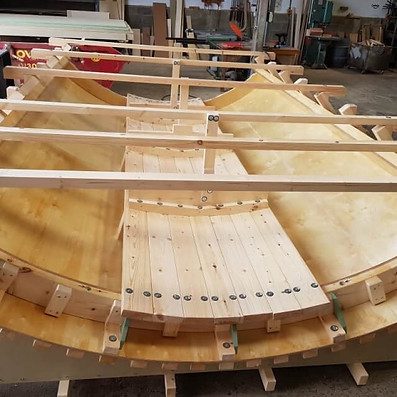
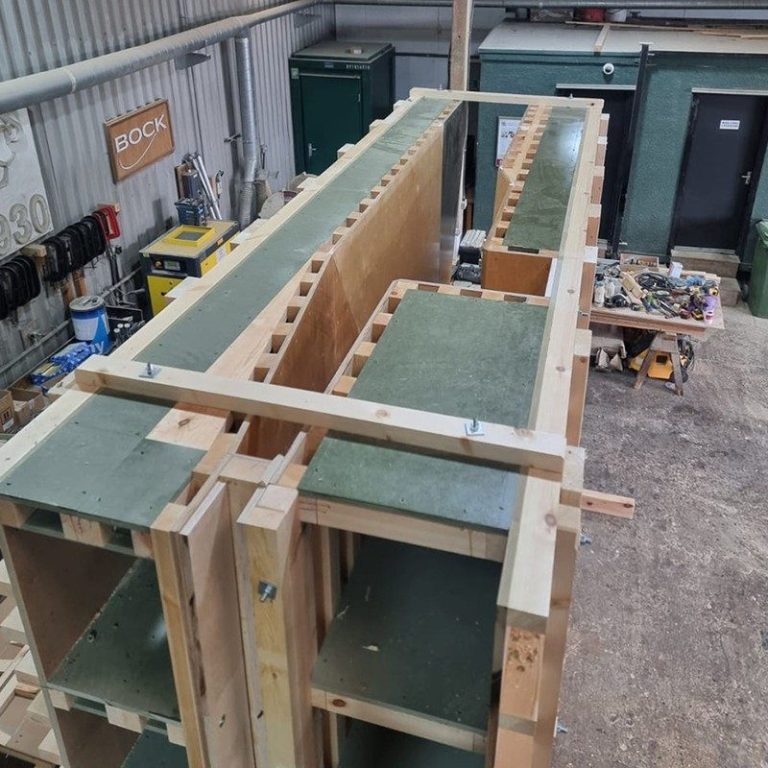
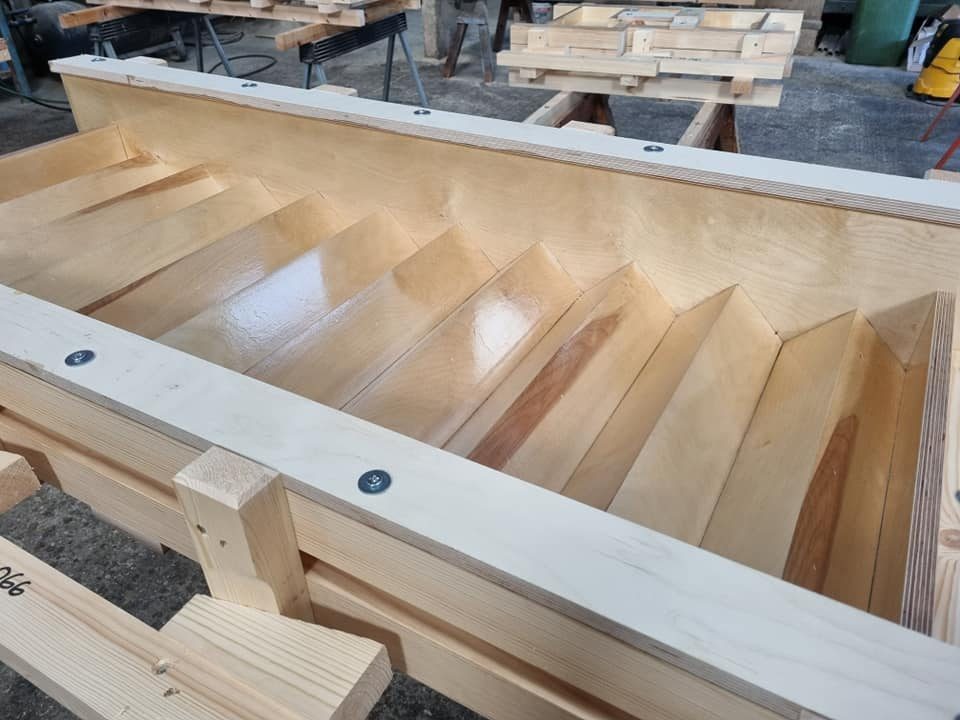
Timber is the most adaptable material for bespoke precast work. You can cut, shape and change softwoods and hardwoods quickly, which makes timber ideal when a design is still being refined or when you only need a small number of units.
Where Timber Works Best
We use timber for stairs and landings, beams and columns, parapets, copings, balcony units, radial seating, one-off features and prototypes. It’s also the go-to material for proving a new design before you commit to longer-life tooling. You can see more examples on our timber moulds page.
What to Watch Out For
However, bare timber absorbs moisture and wears with every strike. That’s why we seal our timber moulds with high-build varnishes. For longer runs, we add GRP faces or fibre-resin skins, which protect the timber and give a smoother, more consistent finish.
GRP Moulds
We build GRP (glass-reinforced plastic) moulds from layers of glass-fibre matting and resin over a gel-coated face. As a result, you get a hard, smooth and dimensionally stable surface that doesn’t rot, swell or corrode.
Where GRP Moulds Work Best
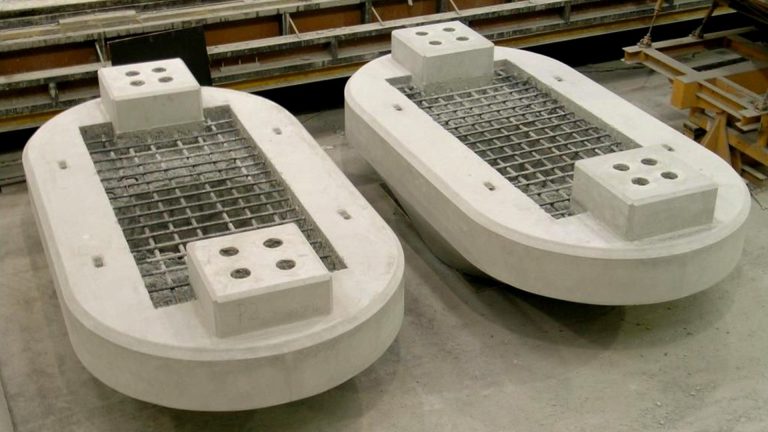
GRP moulds come into their own on repeat production. Because the face stays stable over many cycles, every unit comes out the same shape and with the same finish. That makes GRP a strong choice for wet cast moulds, where surface quality is visible on the finished product, and for architectural units such as cladding panels and cornices.
The Details That Make GRP Moulds Last
A GRP mould is only as good as its detailing. We build in the right draft angles, venting and stiffening for each unit, then add bolted or clipped top straps and fibre-resin sealed joints. In short, those details stop leaks, keep edges crisp and make striking quicker for your team.
Rubber-Lined Moulds
Rubber-lined moulds use a flexible elastomer face, which usually sits inside a timber or GRP case. The rubber picks up fine detail and also lets you strip textured or undercut faces without damaging the concrete.
Where Rubber Works Best
Rubber pattern faces are the answer when the finish is the feature: textured cladding, decorative panels and façade details. We also make moulds that take brick, stone or granite insets, so precast units can match surrounding buildings. Find out more on our architectural precast moulds page.
How Long Rubber Liners Last
Makers design good elastomer liners for repeat use. For example, formliner maker RECKLI says you can reuse its liners up to 100 times. However, real-world life depends on the mix, the release agent and how carefully your team cleans and stores the liner between pours.
Most Moulds Combine Materials
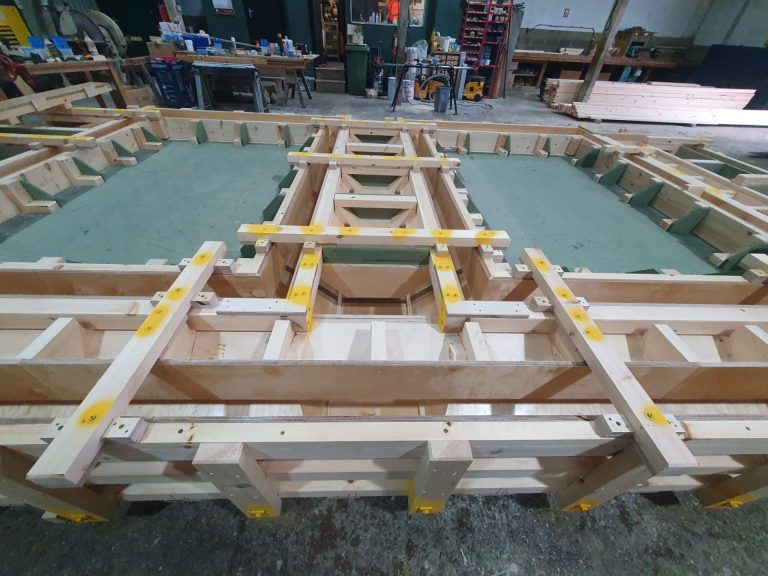
In practice, the best mould rarely uses just one material. A typical production mould might use a timber frame for strength, a GRP face for a smooth finish and a rubber inlay where texture is needed. In other words, combining materials lets you put the cost where it matters and get the most from every pound spent on tooling.
Timber vs GRP Moulds vs Rubber-Lined at a Glance
| Timber | GRP | Rubber-lined | |
|---|---|---|---|
| Best for | One-offs, prototypes, short runs | Repeat production | Textured and detailed faces |
| Finish | Good when sealed | Smooth and consistent | Fine texture and pattern |
| Ease of changes | Easy | Harder once made | Liner swaps easily |
| Durability | Lower unless faced | High | High with good care |
How to Choose Between Timber, GRP Moulds and Rubber
Before you brief a mould maker, it helps to answer a few simple questions:
- How many units do you need from this mould, now and in future?
- What face finish does the specification call for?
- Are you running wet cast or dry cast production?
- Does the design need texture, undercuts or insets?
- Could the design still change after the first casts?
Related reading: not sure which casting method suits your product? Our guide to wet cast vs dry cast is a good place to start. To see why tooling quality matters so much, read the importance of quality moulds.
Frequently Asked Questions
Clients ask us these questions most often when they’re choosing between timber, GRP moulds and rubber-lined systems. If yours isn’t here, our team is always happy to help.
Are GRP moulds better than timber?
Not always. GRP moulds give a smoother, more consistent finish and last longer on repeat runs. On the other hand, timber is quicker to make and change, so it often suits one-offs, prototypes and short runs better.
Can rubber moulds be used for concrete?
Yes. Precast producers widely use rubber liners to create textured, patterned and detailed faces. They usually sit inside a stiffer timber or GRP mould case.
Can one mould use more than one material?
Yes, and most production moulds do. A timber frame with a GRP face and rubber pattern inlays is a common combination.
How do I know which material I need?
First, look at the number of casts, the finish you need and your casting method. Then talk it through with your mould maker, who can suggest the most cost-effective build for your unit.
Talk to Us About Your Next Mould
Not sure whether timber, GRP or rubber-lined is right for your next project? Send us your drawings and we’ll recommend the best build for your unit, finish and production run.